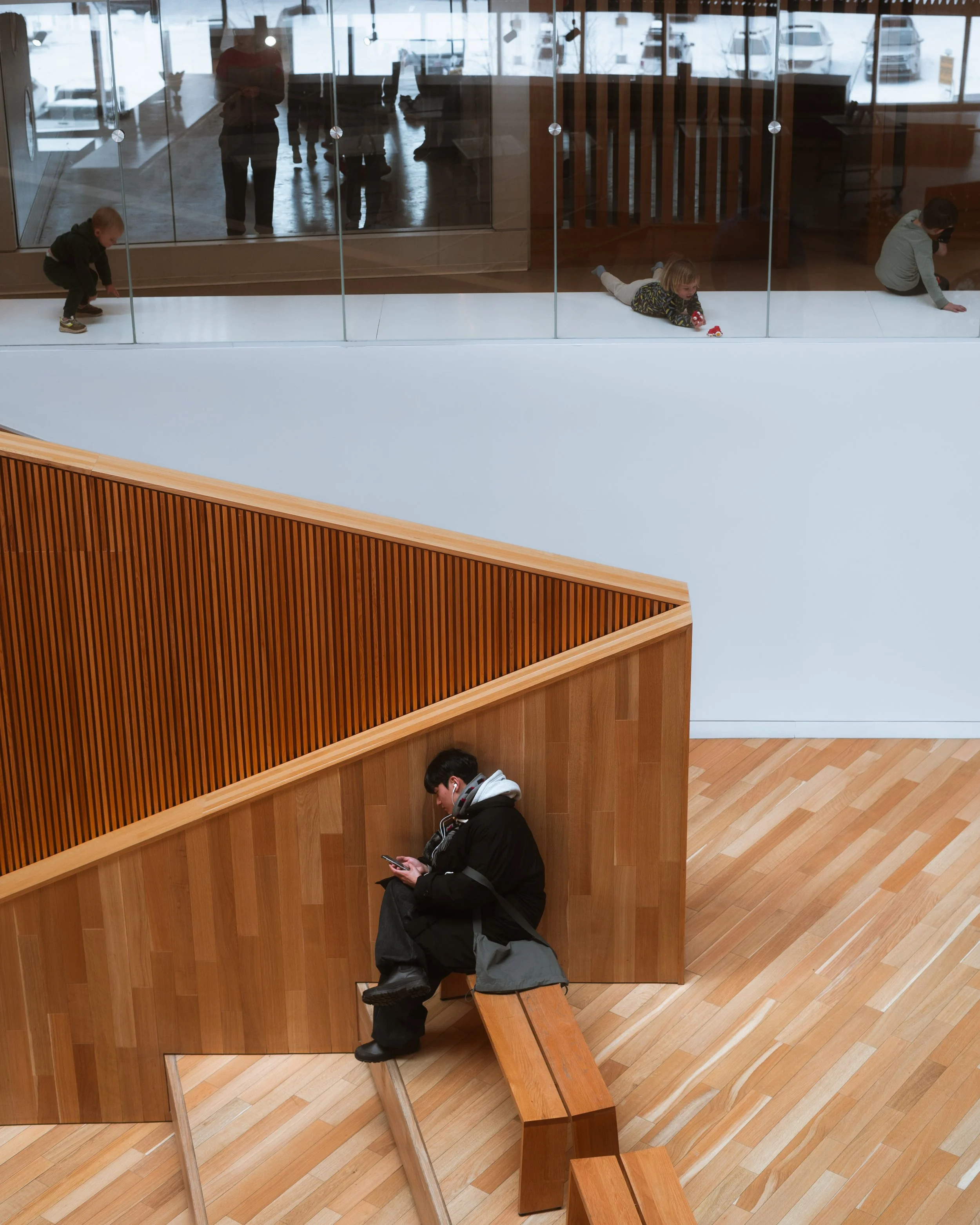
Calgary Central Library: Architecture, Light, and the Feeling of Quiet
Inside Calgary Central Library
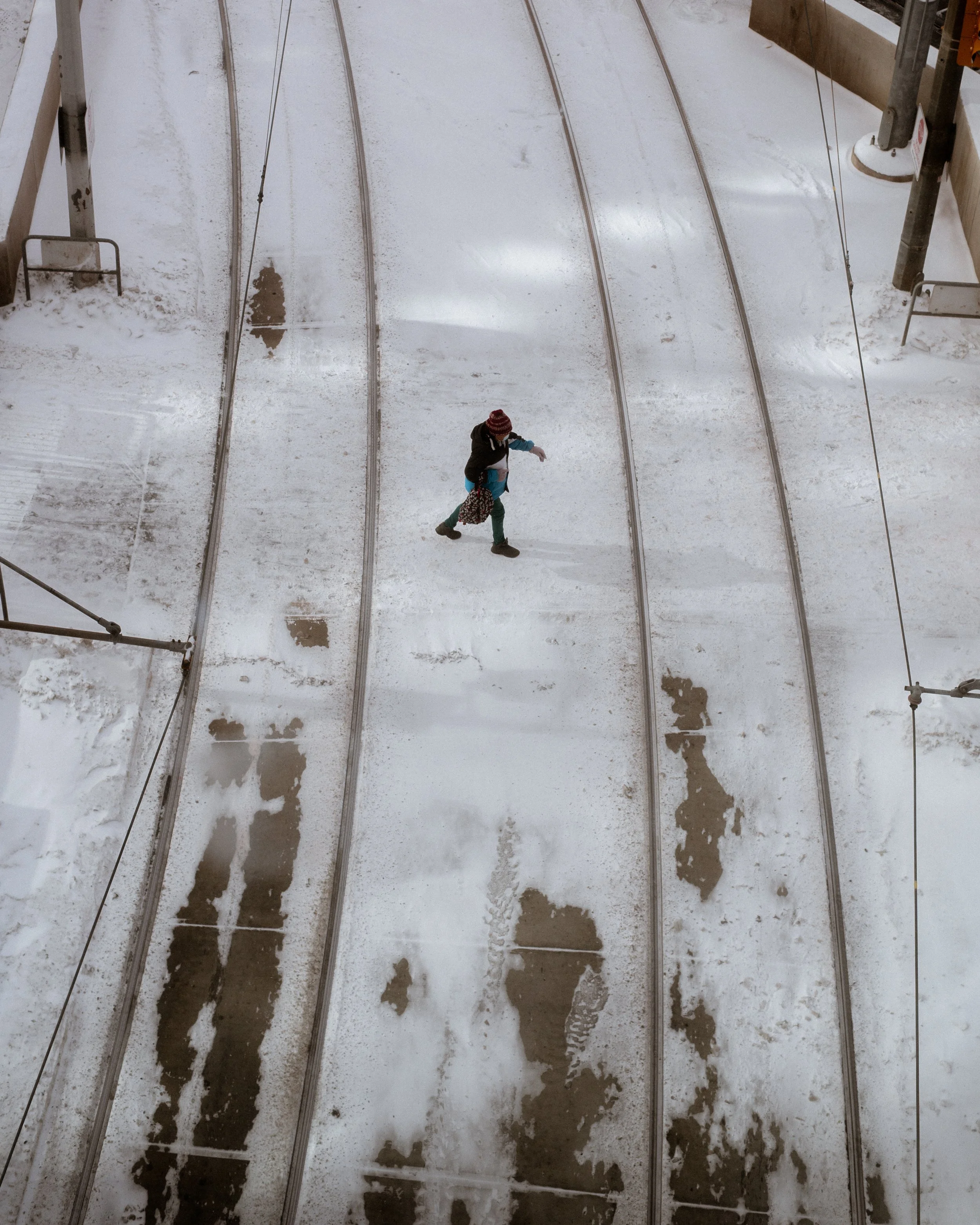
Designed by Snøhetta in collaboration with DIALOG, the Calgary Central Library sits over a Light Rail Transit line that cuts between Downtown and East Village. The building spans that divide, turning what was once a barrier into a point of connection.
The approach is gradual. Terraced slopes rise toward the entrance, allowing people to arrive from multiple directions rather than a single front point. The façade—made up of repeating hexagonal modules in glass and aluminum—opens at one end into a large carved archway. The form references Chinook cloud arches, but it also works as a threshold, compressing the entry before opening into the building.
Inside, the ground floor reads more like a bookshop than a traditional library. Books are faced outward and stacked in multiples, making them easy to browse without needing to navigate a catalogue first. The space is open, with movement happening in all directions—people meeting, passing through, or settling in.
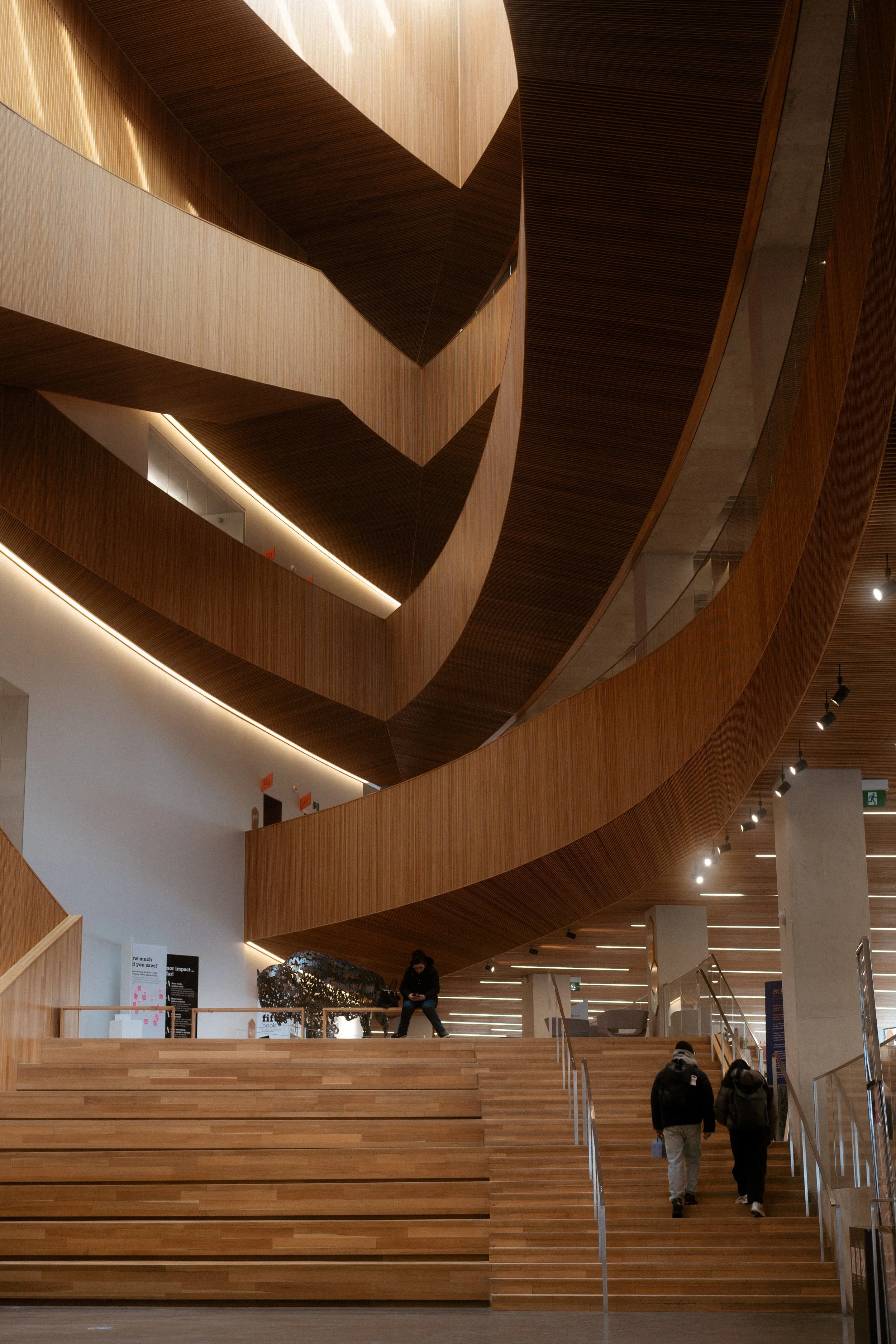
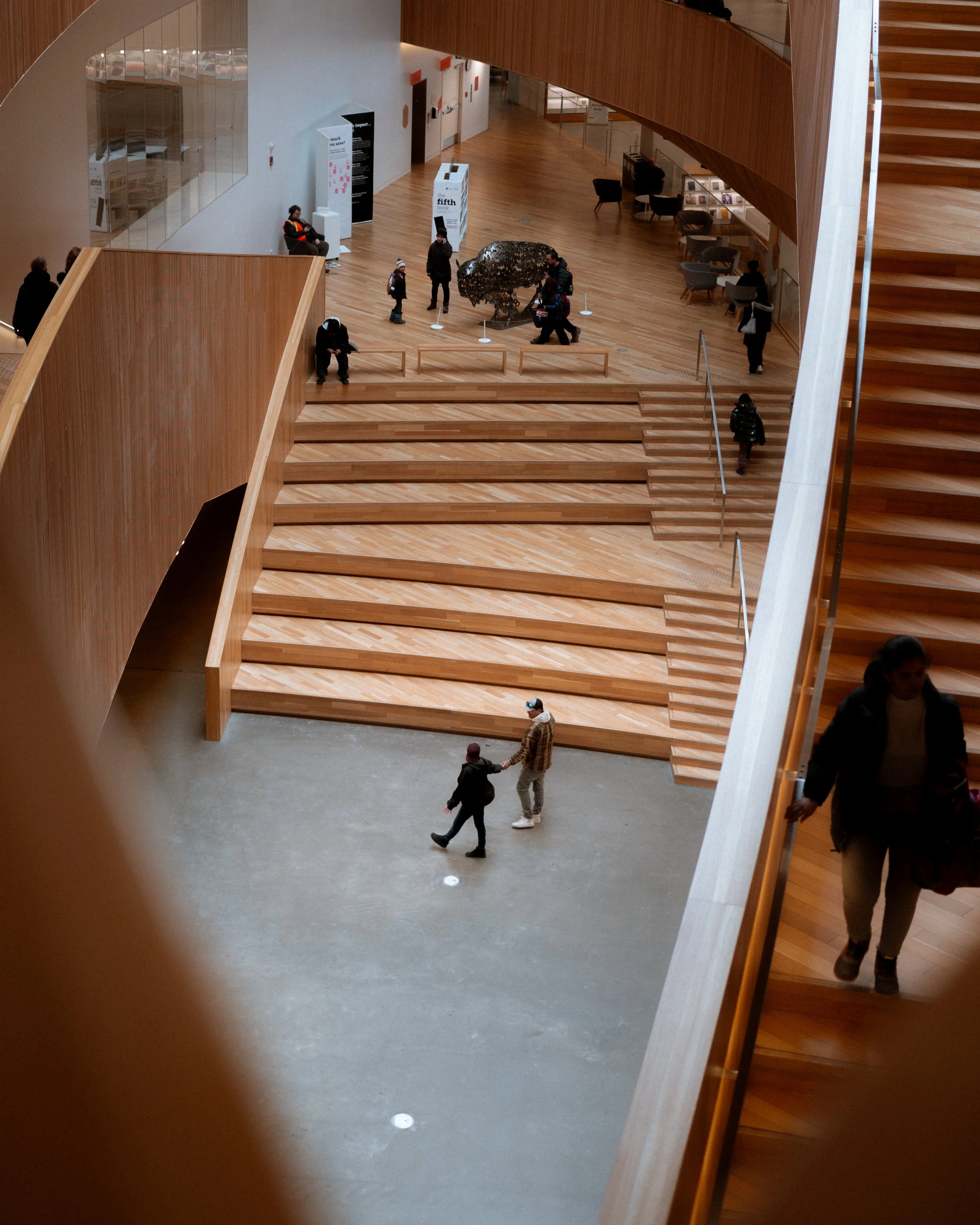
The building opens vertically right away, with the main staircase wrapping into the larger system of curves above.
A Library Built as a Bridge
The building operates as a bridge in more than one sense.
It physically reconnects two parts of the city, but it also organizes different types of activity within a single continuous space. The program is arranged along a spectrum from “Fun” to “Serious,” with more active, social areas on the lower floors and quieter study spaces above.
That shift happens gradually as you move upward through the building. There are no hard separations between zones—just a change in how the space is arranged and used.
The Architecture: Geometry, Material, and Structure
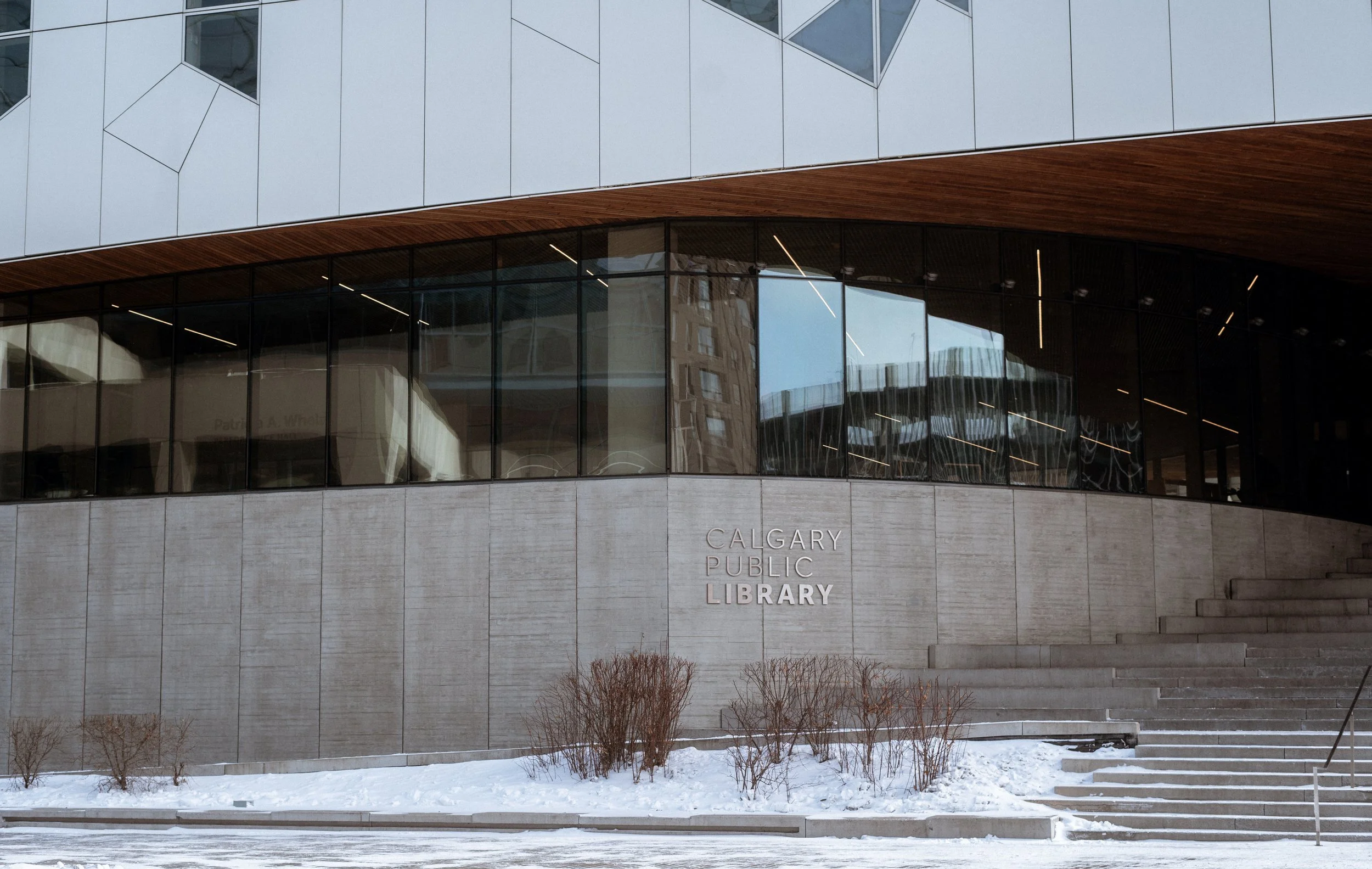
From the outside, the building is defined by its hexagonal pattern. The façade combines fritted glass and iridescent aluminum panels, arranged across a curved surface. Within the pattern, smaller shapes begin to emerge—some resembling open books, others more abstract, like snowflakes or clustered forms. The repetition holds the surface together while allowing variation across it.
Inside, the material palette shifts.
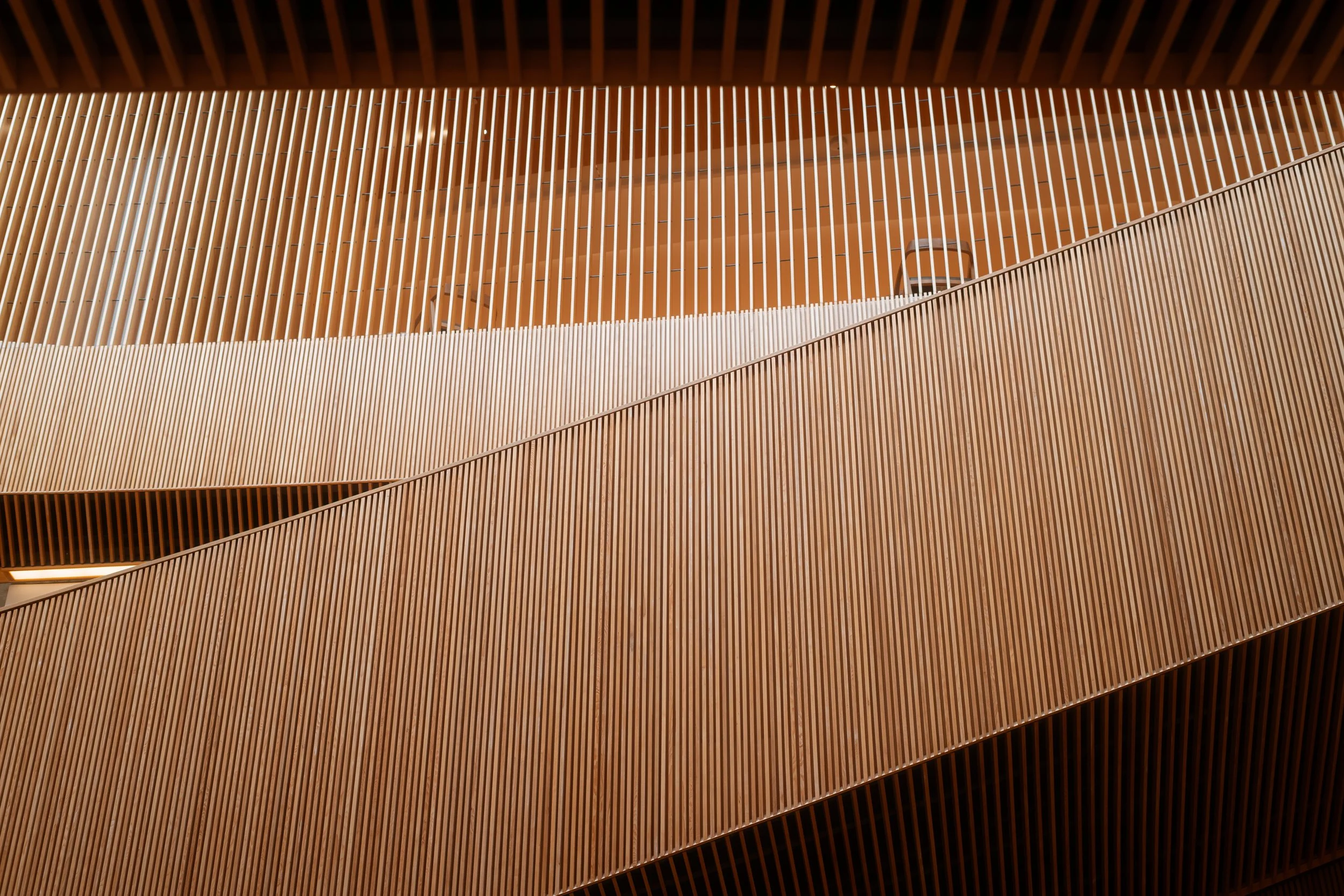
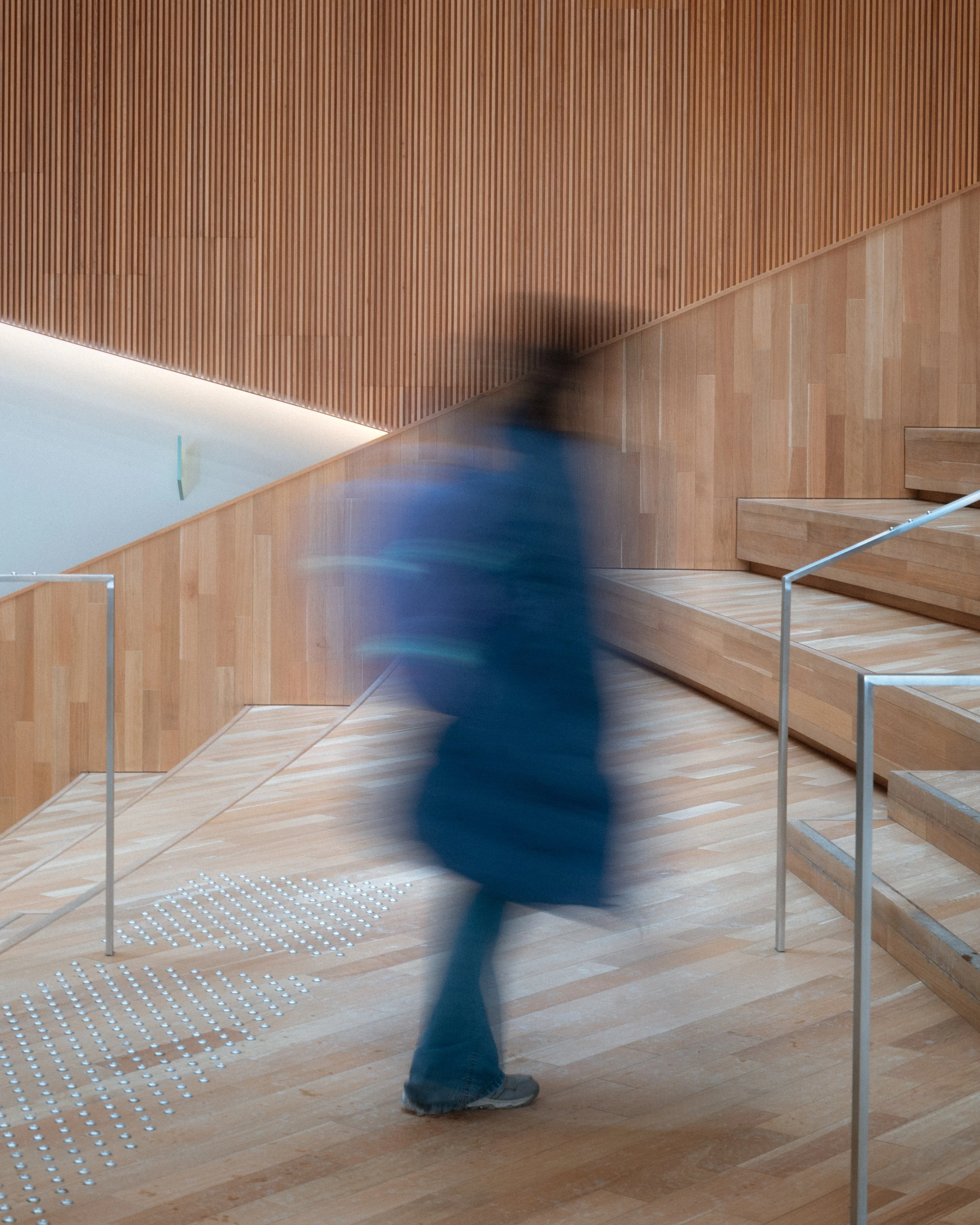
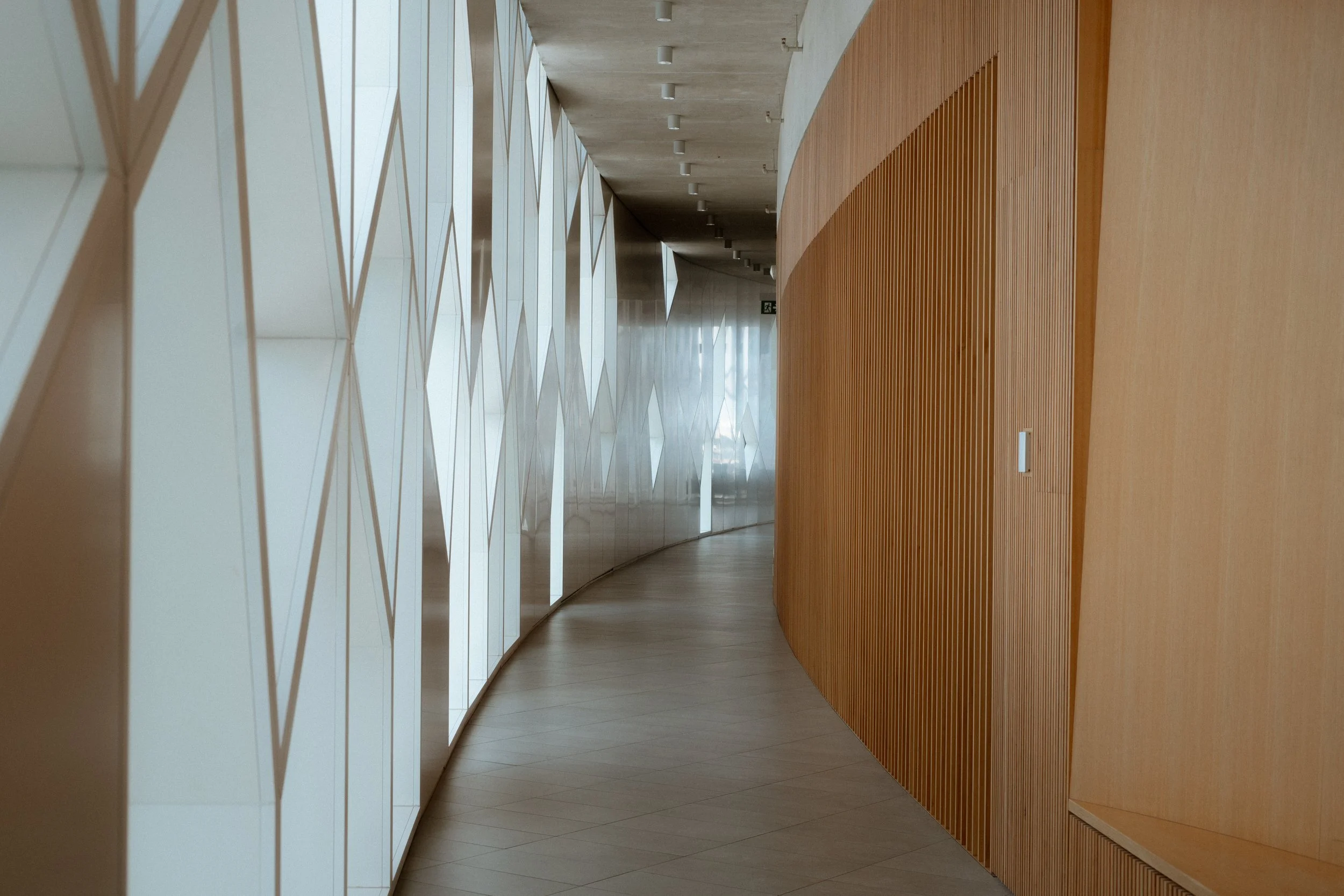
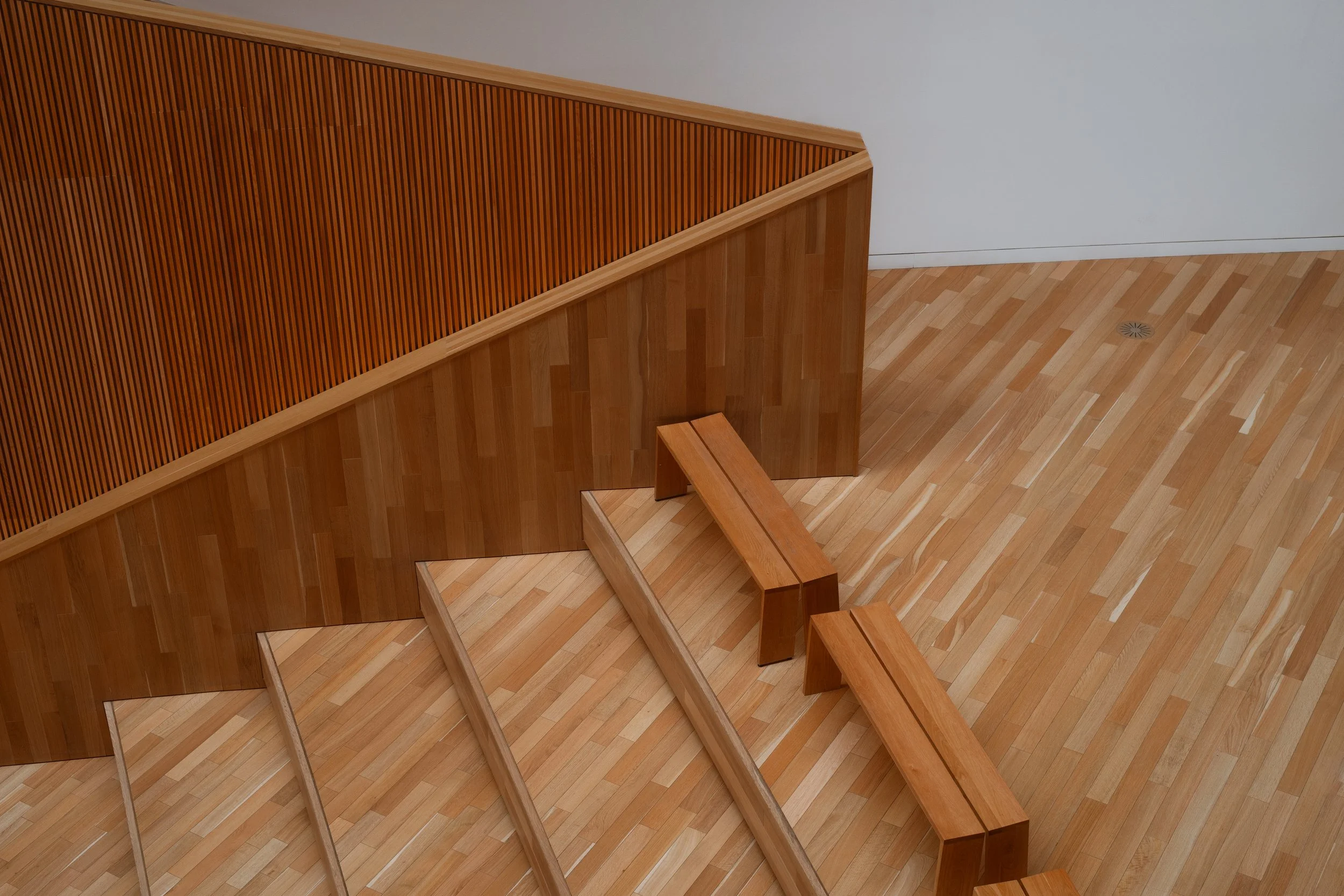
Wood becomes the dominant element, lining walls, staircases, and railings. The curves of the interior structure are continuous, pulling the building into a unified language. Rather than exposing each floor as a separate level, the geometry connects them, with stairs and walkways following the same curved lines.
This continuity reduces the sense of fragmentation. You move through the building without sharp breaks between spaces.
How the Space Is Used
The building accommodates a range of use without isolating them.
On the lower levels, people gather around large tables, move between areas, or use the multi-purpose rooms that line the perimeter. These rooms sit along the edge of the building, maintaining a visual connection between inside and outside.
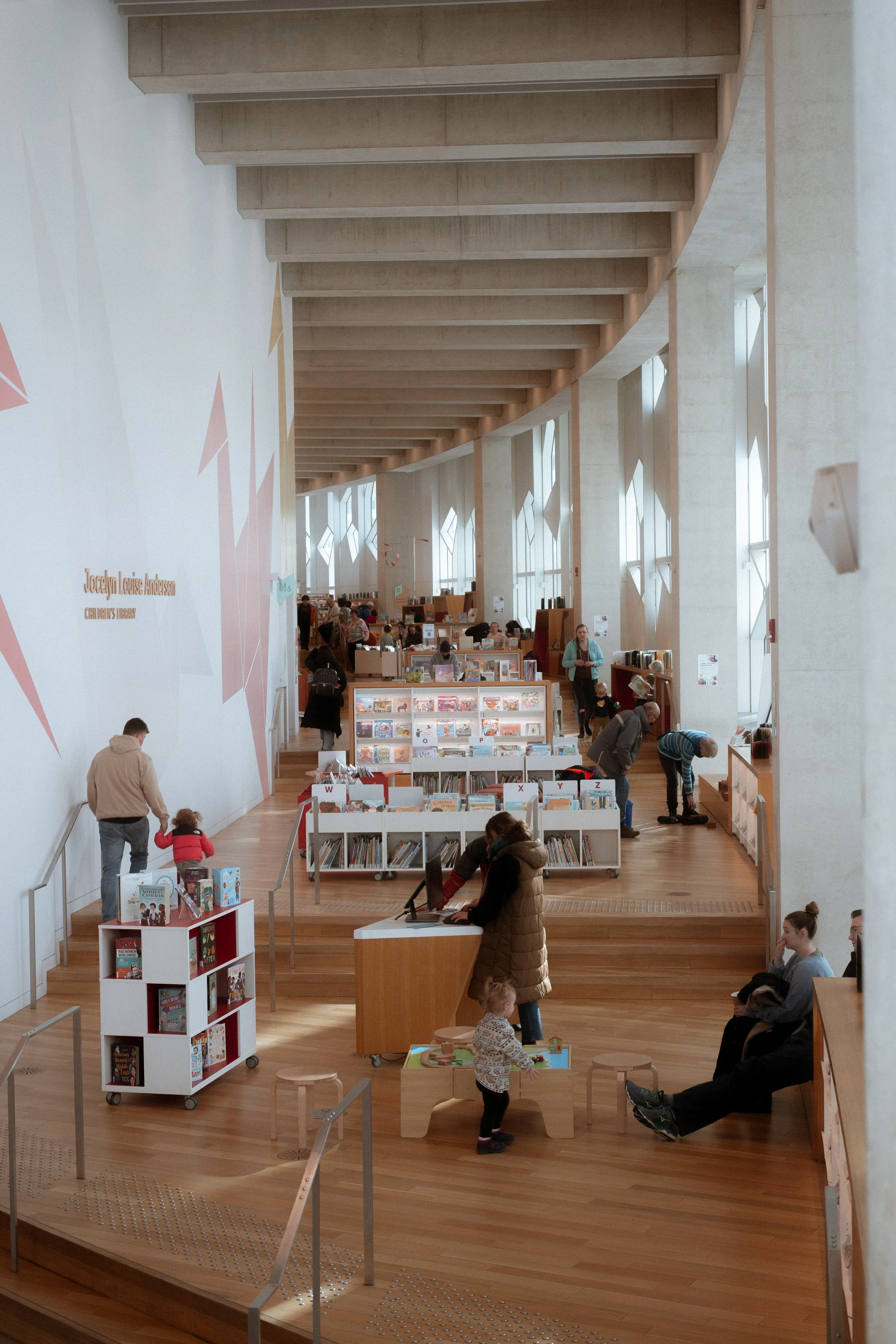
The children’s and teen areas occupy visible, active parts of the floor. They are not separated off or minimized, but integrated into the overall layout.
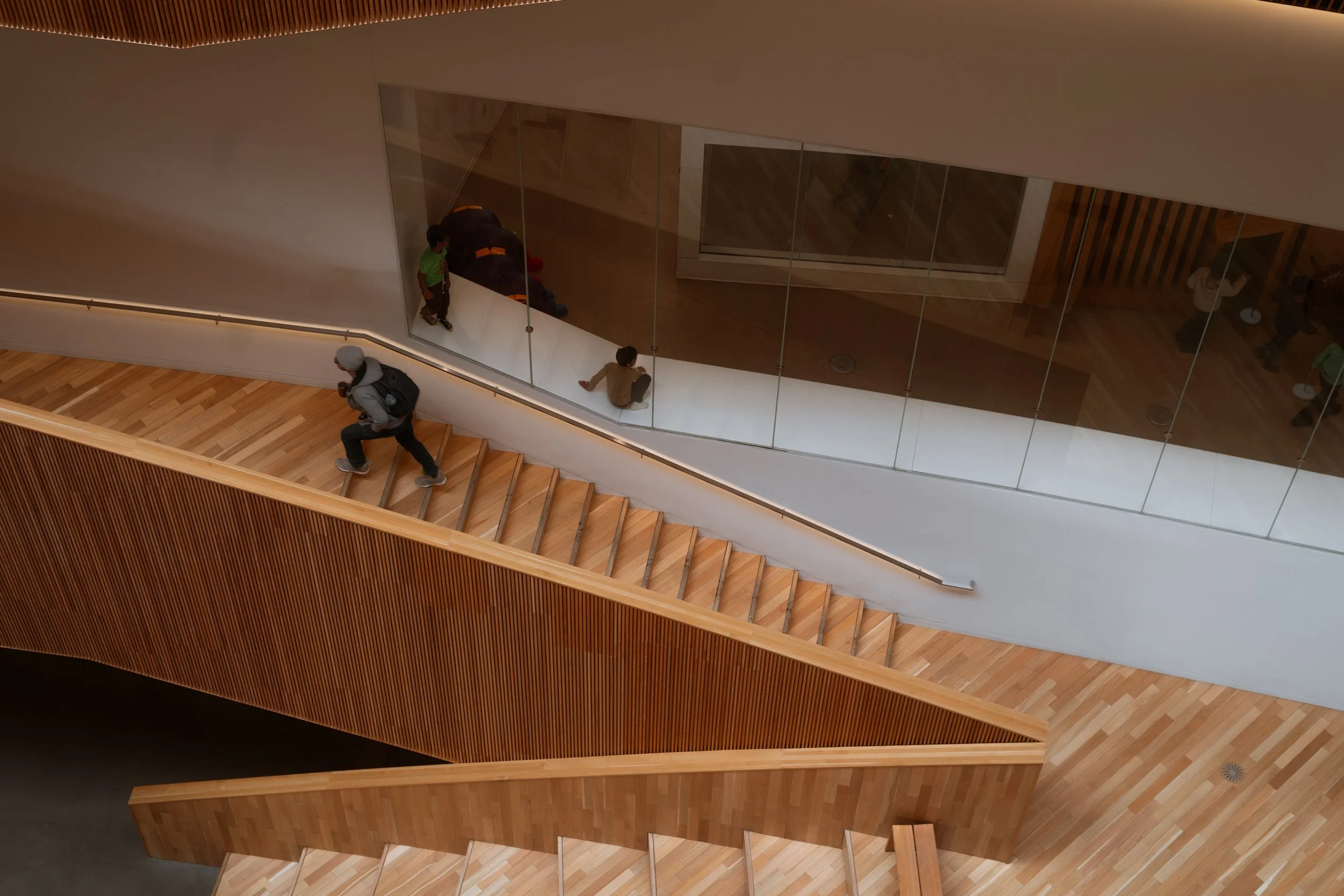
Across all levels, there are spaces for both group and individual use—digital workstations, reading areas, and informal seating. The structure of the building allows these uses to exist alongside each other without requiring strict boundaries.
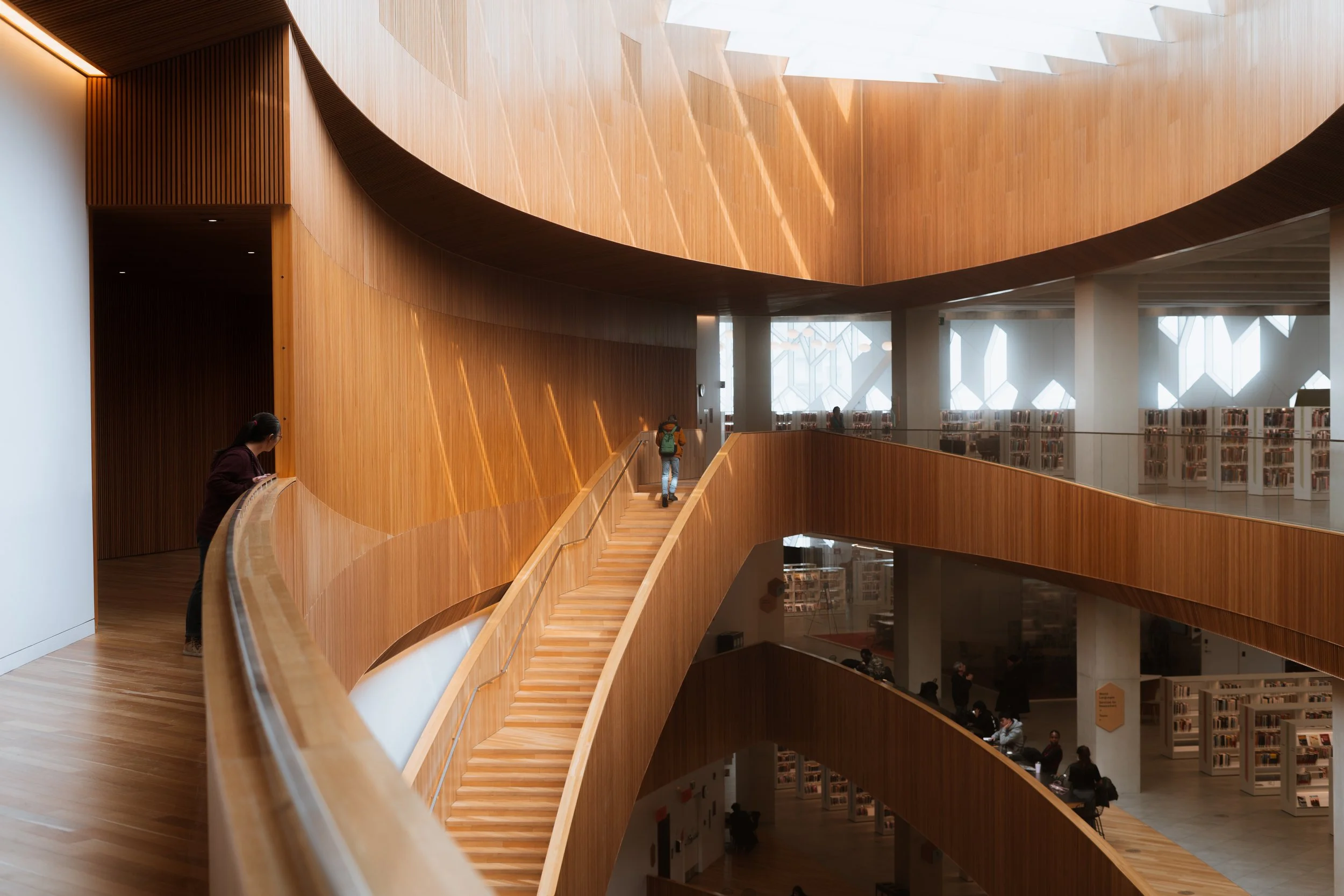
The Great Reading Room
At the top of the library, the space shifts again.
The Great Reading Room is more contained than the levels below. Entry into the room is marked by a transition in light and acoustics, creating a quieter threshold before opening into the main space.
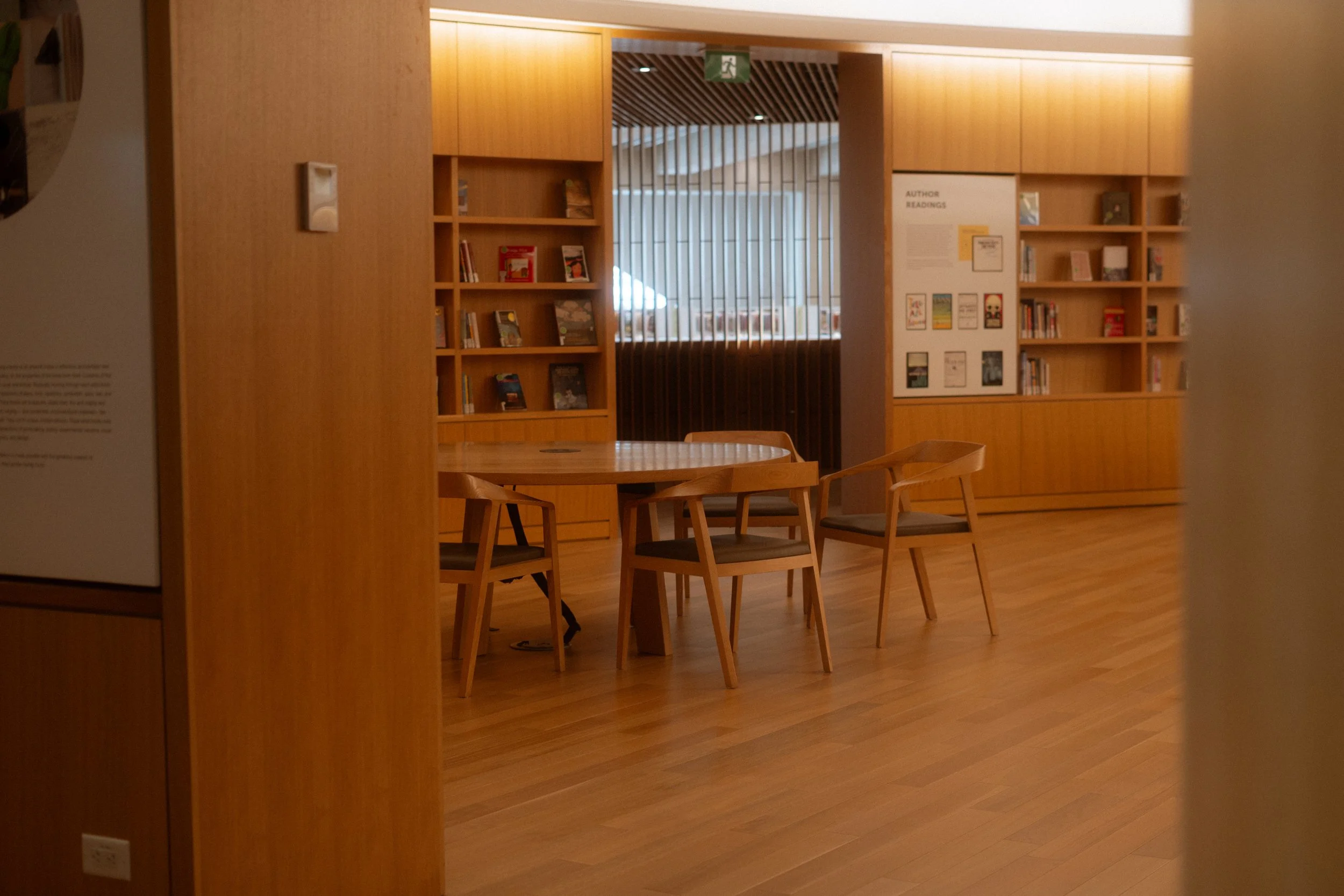
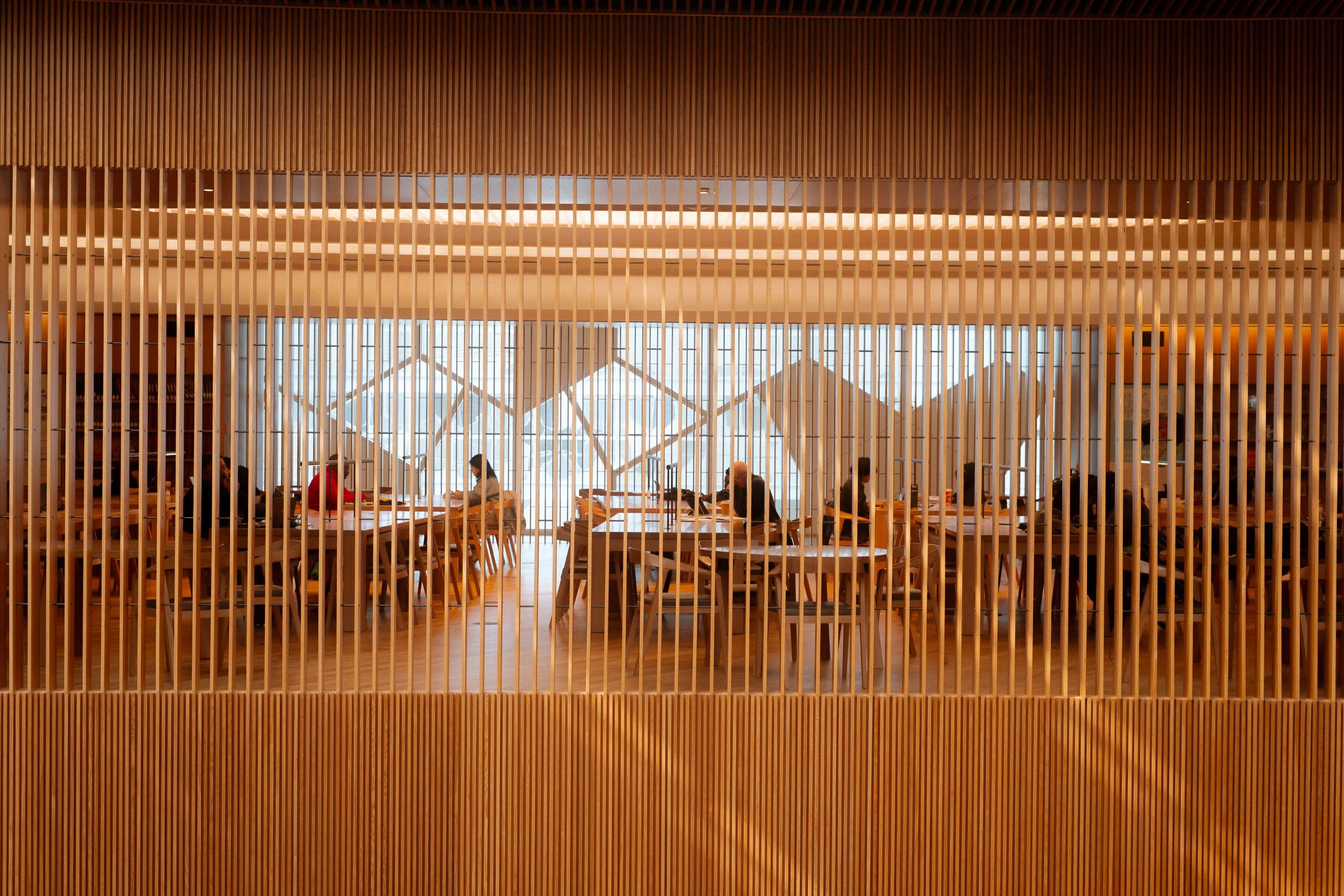
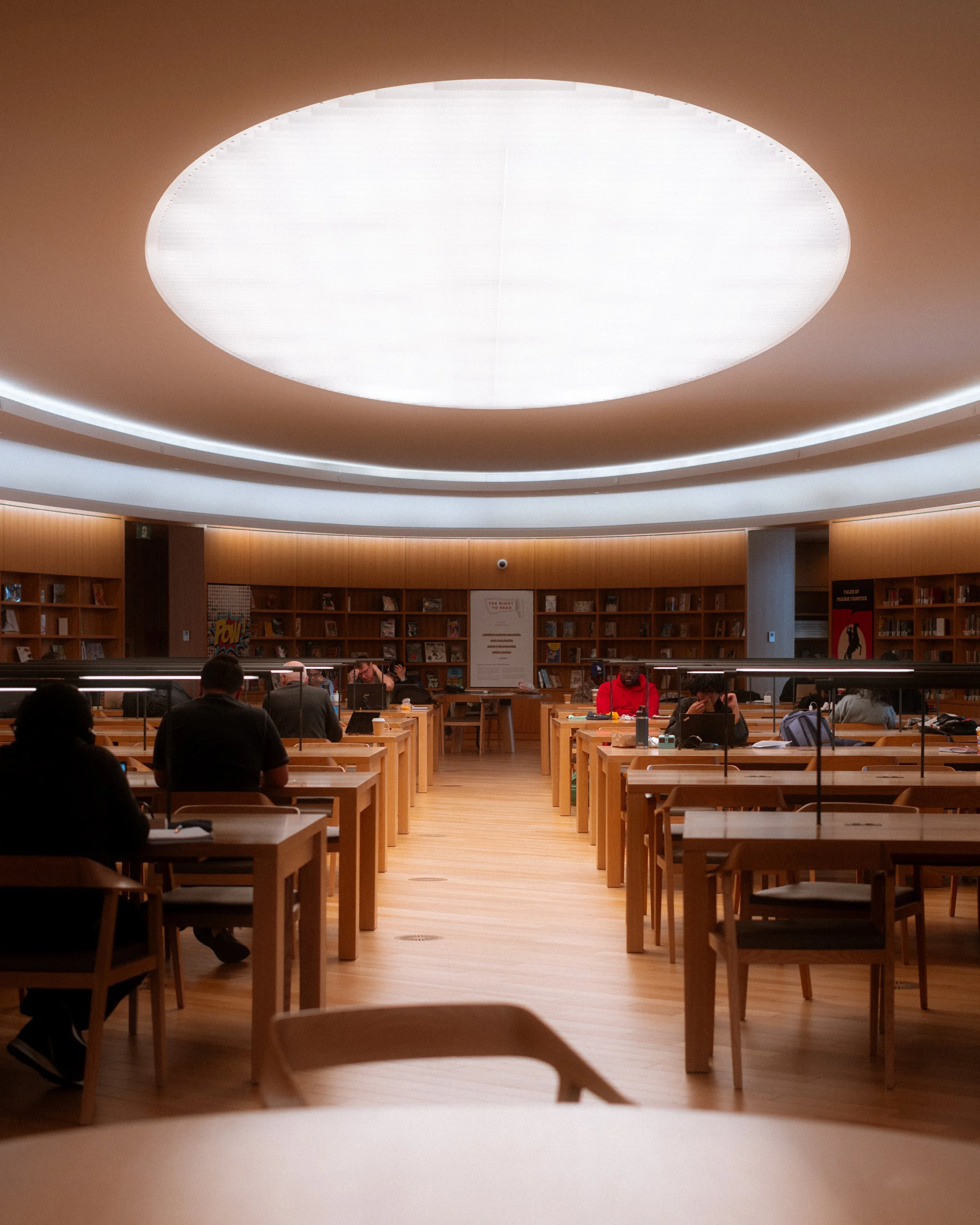
Inside, vertical wood slats define the room. They create separation without forming solid walls, allowing for both privacy and visibility. The desks are individually lit, focusing attention at a smaller scale within the larger room.
Above, a circular oculus diffuses daylight across the ceiling. The light is even and indirect, reducing contrast and supporting extended reading.
The building organizes movement, light, and program without relying on rigid divisions.
Circulation follows the curves of the structure. Activity shifts gradually across floors. Materials remain consistent, even as the scale of the spaces changes.
Each of these decisions is visible in how the building is used—whether for group activity, quiet study, or time spent moving through it.
Spending time here draws attention to the relationship between structure and use.
How a change in level affects noise. How material continuity affects movement. How light can be shaped to support focus rather than distract from it.
The building doesn’t separate these elements. It aligns them.